New Archaeology
A World of Archaeology Where No One Was Looking
This section is under construction and will be expanded soon with the latest archaeological findings.
Scientific belief systems or “paradigms” are the shared ideas scientists use to understand the world. They can be useful, but they can also restrict new research, stifle creativity, and be treated as unquestionable truth. New or conflicting evidence can be ignored or dismissed, causing entire fields to stagnate. This happens in archaeology too especially in the Americas.
Section One
When Evidence Is Ignored, History Suffers
In Central and South America, recent LiDAR imagery has peered through dense jungle canopy to reveal vast ancient cities pyramids, ballcourts, causeways, canals, earthen platforms, plazas, and extensive road networks linking multiple urban centers. Regions long assumed to be sparsely inhabited are now known to have supported complex societies that endured for centuries.
At the same time, new archaeological and genetic evidence suggests humans inhabited the Americas thousands of years earlier than previously believed well before the last Ice Age migrations.
If human habitation in the Americas dates back as far as 24,000 years, archaeologists may have spent decades searching for only half of the potential human record.
Section Two
Paradigm Allegiance in Appalachia
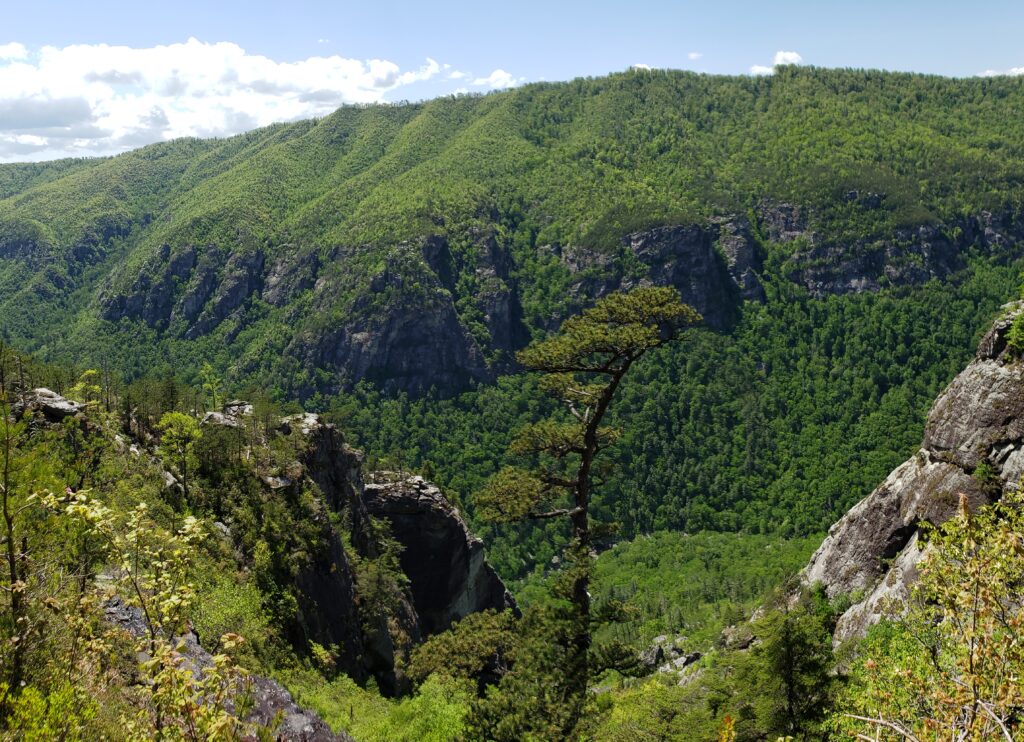
Beginning in the 1960s, archaeology in western North Carolina focused primarily on “settlements” located in lower-lying flat areas near water settings considered favorable for agriculture. Upland, sloping Appalachian landscapes were generally assumed to be archaeologically insignificant and undeserving of serious investigation. Little was found in areas where no one was looking, and for more than 40 years this paradigm went largely unchallenged. Large government land-management agencies like the U.S. Forest Service capitalized on these assumptions, effectively avoiding archaeological research across approximately 70–80% of the landscapes they managed.
Section Three
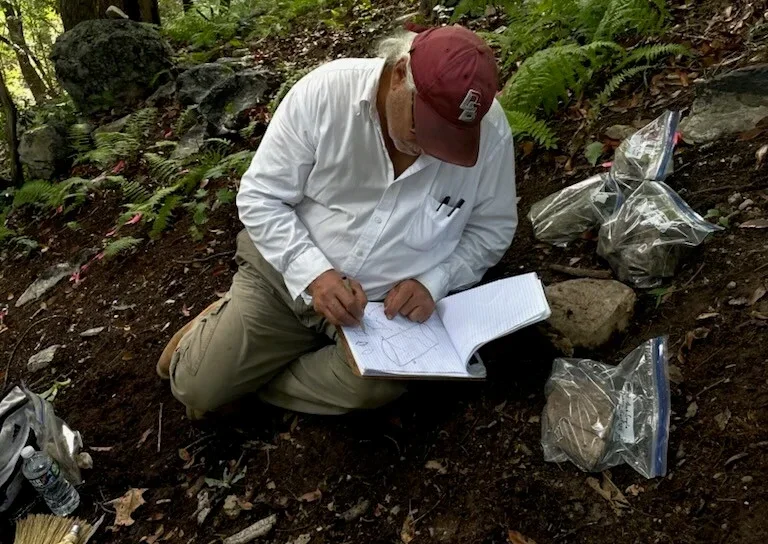
Mountainous Terrains & a "New" World of Archaeology
The word “new” is in quotes because it isn’t new to the ancestral inhabitants who have lived and thrived in these mountains for thousands of years. It’s only “new” to archaeologists and observers disconnected from these places of Tribal history.
In some cases, Tribes have been telling archaeologists or government agencies for years about these items and places, but weren’t being heard, respected, or given an equal seat at the table. Tribal input is critical to moving things forward in an authentic, meaningful way.